Showing posts with label net lease. Show all posts

Monday, August 10, 2009

Net Lease Solstice


By David Sobelman

When describing the point at which the Sun's apparent position in the sky to reach its northernmost or southernmost extreme, one can only wonder if that is what is happening in the net lease investment community; has there been an extreme change in the industry. We have all seen transaction volume decline, but is that the only variable driving the market? What about capitalization (CAP) rates, lease terms and values of underlying real estate. Has an extreme determination been concluded on the net lease investment market? Are we reaching the "solstice" and will we now see stabilization over time? One thing is for sure, investment parameters have changed, but an extreme polarization of the net lease market has not. CAP rates remain somewhat stable as compared to more volatile investment segments, i.e., vacant properties, land, multi-family, etc. So reaching the net lease solstice has not occurred and may not as the nature of the investment segment does not allow itself the volatility of extreme market changes.

Tuesday, July 28, 2009

Golf and Waffles?


By Bridget Lyons

Professional Golfer Phil Mickelson is taking a swing at the franchisee business. He recently made a bid to buy a Nashville based franchisee for Waffle House out of bankruptcy with his two business partners. GS Acquisitions LLC offered $20.2 million in cash and payments to the US Bankruptcy Court to bail out the ailing SouthEast Waffles, a 105-restaurant group that has locations in four states. The Waffle House parent company has a right to oppose the purchase and has declined to comment as of yet, however, they had placed an earlier bid of $19 million.

Wednesday, July 8, 2009

Flight to Quality Now Boarding

Posted in Globest.com/Florida on July 5, 2009

By David Sobelman

I first heard the phrase “flight to quality” during my first job in commercial real estate. I was a research analyst sitting in a cubicle, staring at my computer screen and wondering why there was over 500,000 square feet of negative absorption of office space in Washington, DC--in one quarter.

The year was 2002. That was quite a rude awakening for not only me, but every landlord in our nation’s capital. What do you do with all that vacant space in such a short period? The answer: Lower your rental rate. Tenants began filling vacancies and getting better office space. It was a flight to quality.

But net lease investments are different when considering quality, which is a popular word these days. In the net lease investment industry, we’re typically not discussing the leasing of a single-tenant office building, a large warehouse or a small retail center. We’re discussing investments--the purchasing of assets for an immediate return.

So how does one define a flight to quality when considering a net lease? It depends who is buying.

People want more for their money in today’s market. However, quality varies in any investment, let alone net leases. The first quality adjustment we are seeing is a desire for choice real estate. Location is still of the utmost importance to investors.

Buying a Walgreens location in Dubuque, IA is different than buying one in New York City. You may be getting the same credit and same lease terms, but the real estate has become a big consideration for investors today.

The investor has to know that at the end of the day, they are still buying real estate. Consider the worst-case scenario: If my great tenant leaves, what am I left with? Where is the building? What is around the site? How can I access it? We are all real estate professionals, but the quality real estate was forgotten for many years.

Additionally, investors are focusing more on the credit of their tenant. Gone are the days that you can put a very aggressive cap rate on a one-unit franchise operator of a concept that you have never heard of before and close the transaction in 21 days.

The investor’s flight to quality for tenancy has become drastically more apparent in the last 12 months. In 2008, when it truly did seem that the sky had fallen and was actually beginning to dig a hole to the center of the earth, no one was really sure of how to rate a company’s credit. Those institutions that had a credit rating by a major agency, such as Standard & Poor’s or Moody’s, were being questioned because they got so many things wrong.

Companies with “A” credit or better were going bankrupt or being downgraded so fast that it was hard to keep track of them. The term “investment grade” almost became a joke. But now that the economics of the industry have calmed down and recovery is under way, the credit of a company seems to have taken on a new meaning.

History has proven that credit matters. Over the last half-decade, it was proven that if you had a net lease investment, you could get financing. Now, you truly need a credit rating of “A” or better to get above-average financing. Otherwise, you’re left with a full recourse loan with a very low loan-to-value ratio.

Credit tenants are still comparably garnering somewhat stable cap rates, but those that lack the financial reporting worthy of an overly scrutinized underwriting process are seeing their returns rise and prices lowered because of the perceived risk. The credit of the tenant has seen new meaning and the credit tenants are sought out more so now than ever before.

Lastly, the lease terms are becoming a talking point that quality seekers seem to be discussing more. The words “absolute” and “bondable” are heard more and more as investors seek new purchases. Triple net assets are trending to become, well, triple net.

The mere definition of the investment class started with the understanding that the tenant would be responsible for taxes, insurance and maintenance. Yet somehow over time, triple net became defined however you wanted to define the structure of the lease. Maybe the landlord is responsible for the roof and structure of the building, but not the daily maintenance. Or maybe the HVAC system falls on the landlord, but no other items.

Whatever the case may be, triple net became double net, single net or half a net. If there is some responsibility of a landlord, then the investor wants to be compensated for it with a higher return. So when an investor says that they want a triple net investment, they want to sit back, collect a check and never even get a phone call about the property. They want to think of the property once a year when they are filing their tax returns. The flight to quality is in the lease terms and investors are seeking out the absolute, most passive form of real estate ownership.
But a true flight to quality still depends on the individual investor. We have to realize quality can be defined a number of different ways. But net lease investments have truly seen a change in recent months, with scrutiny being placed on the attributes of an investment that haven’t been considered in years.

One may be able to take a great parcel of land but have it encumbered with an old and outdated building with a terrible credit tenant and turn it into a goldmine over time. But today’s investor has a somewhat different destination--a nonstop flight to an oasis called “quality.”

Wednesday, June 10, 2009

Jonathan Hipp of Calkain says $10 Million is the New Black

Jonathan Hipp, President/CEO of Calkain Companies, gives his insight on the current condition of the commercial real estate market. While general perception would have you believe transactions have come to a standstill, the reality is much different. Deals are still being done and money is still being made. Preference has simply shifted to lower cost (and lower risk) purchases. To find out more, check out the video.


Real Share’s annual Net Lease Conference on April 29th, 2009

Monday, May 4, 2009

Medical Office Real Estate May Be the Way to Avoid Un-Healthy Investments

By Winston Orzechowski

While many real estate investments are losing value, the Medical Office sector has shown remarkable resilience. The segment is holding up much better than other property types and this trend projects to continue. So who do we have to thank for this bit of good news? Well the Baby Boomers of course. Though a recession can slow many things down, one thing which it cannot alter (although it may seem like it can) is the progression of time. The simple fact is that as more boomers age, they will inevitably have an increased amount of medical issues which subsequently turn into an increased amount of medical costs. This all adds up to relatively inelastic demand for medical services and their pertaining medical office buildings. So if you’re considering investing in today’s market, there may be no firmer investment than our nation’s infirmaries.

Thursday, April 16, 2009

By Nicole Hipp

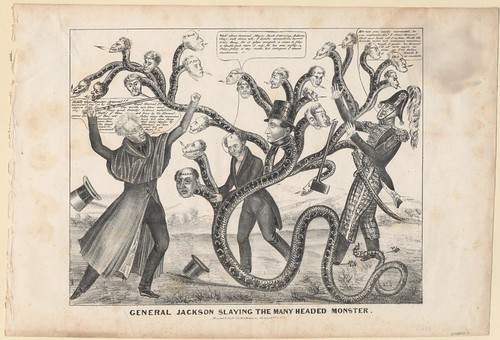
If I were to make a bobblehead of myself it would resemble a many-headed monster….to wear all the hats that I don each day as I morph in and out of my many roles. It’s career week in my 6 year old daughter’s classroom this week and on Tuesday evening she asked me “Who is Daddy? I mean not his name but what’s another thing we call him?” Ok, so I had to bite my tongue and resist all the clever answers immediately spinning in my head and said “Net Lease Broker”…which for some people, in this economy, could have a whole different meaning! And then she asked about me and I said “Bookkeeper”. And to avoid the next question I immediately offered a piece of distracting trivia to make my job sound a lot more exciting (in case she was compelled to share it with her class). “Did you know that bookkeeper is the only word in the English language with THREE sets of double letters all in a row?” (Recent news to myself as well!) She stared at me blankly perplexed much like she did when I tried to teach her “The Hustle”. So I tried to better explain that I count all the money and write checks to pay bills. She must’ve understood because as soon as Daddy stepped in the door, she proudly announced, Mommy is a book writer! Which is not a complete mistruth as I do have one of those in the works. And then the next day when I picked her up from school she shares “I told my class you are a book reader.” To a 6 year old this is quite the profession. Something they aspire to, so I accept it. After all, being a book reader to our kids really is a great thing. For many families, the economic downturn has been an upturn for the quality of family time. The creative juices that flow when you are trying to save money can be fun. Children now have a greater opportunity to learn some values – not just of money. And instead of constantly finding yourself on the run or eating out, families are eating in and entertaining themselves with each other AT HOME. The rat race got way out of control. And now consumer spending is down. It hurts in some ways. But when we are not out “consuming”, where are we? Hopefully at home with our families….book reading.

Monday, April 13, 2009

Teaching New Dogs Old Tricks and Old Dogs New Tricks

By: Patrick Nutt

While it may not come as a surprise to everyone, the real estate market and broader economy is in a bit of a downturn. Many have focused their attention on the negative signs and headlines cast through every channel of media, but I’ve taken a much more micro-economic view; as in the economy located within the confines of my personal checking account. I quickly realized that there wouldn’t be any deposits into my “local economy” from TARP or the federal stimulus plan, so the best way out of this recession is to put my head down and work hard, with the belief that it will all pay off one day. A quick survey of my inbox indicates that many brokers have left the industry, whether by force or by choice, which instantly creates an opportunity to grab market-share and build a pipeline to benefit from the eventual recovery.

There are countless articles, webinars, seminars, teleconference marketing symposiums, and any other fancy titles for listening to people tell you how to do something better these days, most of which focus on tips of the industry pros for surviving the current down cycle through using technology, and being creative. I recently listened to a teleconference call discussing marketing and branding ideas for commercial brokers, and one example was discussed where a broker made bobble-head dolls of himself to pass out to his clients and prospects. This may be an extreme example, but it just goes to show you that necessity is the mother of innovation, and right now, generating business and maintaining relationships is a necessity.

Every possible form of electronic communication and networking seems to be on the forefront of discussion, covering everything from Myspace and Facebook to using Twitter and blogging. The popularity of these items and technological gap between industry veterans and the younger members in the brokerage community has caused many “old dogs” to try and learn a new trick or two. At the end of the day though, no “Tweet”, text, or email will be able to replace the old fashioned phone call, face-to-face meeting, or even a written letter. I have been fortunate enough as one of the younger members of this industry to learn from veterans that still preach the basics and have seen it pay off. Now’s not the time to skip the basics and forget the fundamentals, so when you’re trying to teach an old dog a new trick, don’t forget the learning can flow both ways, and it’s never too late for a “new dog” to learn some old tricks.

Wednesday, March 25, 2009

The Unknowing Student…

By: Shane Scanlon

As a soon-to-be college graduate, my cohorts and I should gain a sense of freedom; alleviating oneself from a lifetime of structured learning and accruing debt. Graduates across the country are finally given the excitement of trying to map out the next 60 years of their lives; however given the current volatility of worldwide economies, we have found ourselves coping with the greatest deal of uncertainty. With the tailspin of the financial markets and many “gen Y-ers” experiencing a first-hand account of their parent’s retirement plans diminishing, another question remains: What are we to do with our money?

As a child, my father always stressed how first impressions are everlasting, and I find that notion true based on my personal experiences to this point in my life. If true with people, I also feel could be true with investing and in a student’s case, there may be a lifetime of paranoia linked to this practice. Between the Dow Jones standing at a mere 58% today compared to its 52-week high and Bernie Madoff organizing the largest investment scandal by a single person, students are going to be left vulnerable in search of a stable avenue for their money. As surprising as this may sound to some of us within the industry, there are people out there who are not aware of passive investment in real estate. The media has engraved the idea of “Flip This House” to be investment real estate which has left people in their mid-20’s shying away from wanting to learn more due to their home-value tumble. In a study done at the University of Tampa, only 5 students of 40 were aware of what a net-lease investment was, and also 33 individuals identified investing in real estate “unfavorable.” When following up with some of these individuals I had found that none of the 5 students who knew what a net-lease investment was were in the 82nd percentile who suspect investing in real estate to be unfavorable.

I see a long-term opportunity for many professionals involved in real estate investment. Sure, it is unreasonable to assume a 23-year-old college graduate earning $42 thousand annually is going to be able to currently afford a $5 million Walgreens, however the ability to penetrate this market with the idea of educating can be advantageous. By simply creating awareness of what a net leased asset is and the passivity of such an investment, you can engage an entire age group who is looking for that trustworthy “someone” to provide answers during their greatest period of ambiguity.

“With every challenge comes a new strategy for taking action.” – Ralph Marston

Monday, March 16, 2009

Musings Of A Veteran Broker

By Guenter Manczur

Those of us who have been around long enough to see prior real estate cycles remember only too well the period of 15% – 18% interest mortgages, the closure of numerous industrial banks and the much larger savings & loan debacle that was followed by an era when RTC-controlled properties seemed to be the only ones being sold.

Yet here we are, some 20 years later, having recently experienced an unparalleled period of price appreciation and economic growth in almost all sectors of the real estate industry. The expectation of constantly increasing prices has been the business model for many property owners, and countless purchases were made with the full expectation that an owner could re-sell any property, any time, for a profit.

Is it reasonable to expect that explosive growth can continue unchecked for long periods of time? Of course, not. Most of us agree that prices fluctuate with supply and demand conditions, and that periodic imbalances will result in price corrections.

In these times of being inundated by a barrage of negative financial news, it’s helpful to remember that commercial real estate transactions will continue to happen even in a down-market, albeit at a slower pace.

Tuesday, March 3, 2009

It’s Darkest before the Dawn

By Jonathan Hipp

It is very easy to justify why it’s okay to be mediocre in today’s real estate market when you listen to the news in its various forms. And then there are all your colleagues and competitors validating all your fears. Markets like this require you to adopt the champion’s creed if you are going to succeed and grow even when all common sense seems to justify the opposite way of thinking. I believe that misery like’s company and it’s easy to become involved in those types of conversations and relationships with family, friends and associates. The thought and attitude used to be that the good times would never end as capital was flowing relentlessly and it seemed everyday that somebody was flipping a property for a big profit and brokerage commission even before they had gone to settlement. It was so easy; we all had keys to the castle. Many brokers and investors made big money by just showing up and playing the game. So here we sit today licking our bruised wounded egos and reflecting and asking where we go from here. I find this from Roger Staubach, former chairman and CEO of the Staubach Company, very fitting for the challenges our industry and ourselves face today.

“To me success is being able to feel good about how you’ve done things. You have to have balance in your life. You can’t think only about ‘what’s in it for me?’ You have to give back and ask for help and say you’re sorry and contribute to the success of others. And you can never give up. Athletics taught me that. You must work hard, prepare, learn from your losses and continue to fight until the very end.”

It’s very true we don’t know how long this cycle will last and we probably haven’t reached the lowest point yet. But I can tell you that it’s always darkest before the dawn.

Wednesday, February 25, 2009

Cohorts of Capitalism

By Cheri Martin

I’ve heard all the statistics, which seem ever-increasing on a daily basis, but during my recent search for a new apartment and subsequent endeavors to furnish my humble abode with furniture and electronics, I have cause to reconsider the widespread premise that America is in a recession.

Capitalism the basis for our economic wealth system in America has been described by different economists, different ways. Milton Friedman, an American economist, statistician, public intellectual, and Nobel Memorial Prize recipient in the field of Economic Sciences once supplied “the social responsibility of business is to use its resources and engage in activities designed to increase profits through open and free competition without deception or fraud.” [NYT, 1970] The Economist, a weekly news and international affairs publication which advocates free markets and minimum government regulation to prevent business monopolies, has hailed Friedman as "the most influential economist of the second half of the 20th century…possibly of all of it."

Fast forward to the start of the economic downturn in December 2007, the fall of Wall Street and the financial sector, coupled with the end of the housing boom and, consequently, nearly 3.6 million people unemployed to date. Yes, for many Americans, including me, the current climate is quite frightful, but I wholeheartedly believe this is merely a market correction and a return to moderation.

For example, when I began looking for an apartment in December 2008, I found less than 10% vacancy rates and $1,200+ pricing. Some of the residential communities, offered special lease incentives, but the lease structures were based on competitive rates and pegged to make money, rather than lose it. This was contrary to the message that mainstream media sends to me everyday that the times could be indicative of the end of days for America the Beautiful, as I know and love her, as a capitalist society.

In January 2009, after 60 years in business, a major US retailer of specialty consumer electronics, appliances and PCs announced that it was closing its doors. Since the announcement, the retailer has closed many of its stores and liquidated inventory to sale at select locations. A few weeks ago, I ventured out to check the prices on their large, flat screen televisions. Upon my arrival, I found the prices were higher on the products with only a minimal discount being given, than they were before they filed for Chapter 11 bankruptcy. “How is this possible that your prices are higher when you are going out of business, I thought, when most of the remaining inventory is previously used display screens?” It just did not seem logical. The store was packed with people like me interested in seeing how much bang they could get for their buck. There were a few takers, but mostly window shoppers willing to return when the real discounts were applied to the products.

My expedition to purchase furniture led me to several different retailers offering similar style and quality products, but under different brand names with moderate to high- end pricing. All the stores were located in the same 1 mile demographic. One of the high-end retailers was going out of business, so I wanted to see what I could find. What I found was $3,000+ beds, yes, ONLY the bed, and $7,000 sofas, definitely out of my league. Given the lack of foot traffic in the store during my visit, probably not a realistic approach for most consumers during these times, especially when the moderately-priced retailer offered the same merchandise at lower prices, with additional discounts and credit financing.

Piero Sraffa, an influential Italian economist, defined capitalism as an entire system of social relations among both producers and consumers, but with a primary emphasis on the demands of production. According to Sraffa, “the tendency of capital to seek its highest rate of profit causes a dynamic instability in social and economic relations.”

The economists seem to have the right idea across the board that capitalism and its success or demise is largely based on relationships, how we choose to forge forward as businesses and consumers, employers and employees, government and citizens. I believe the techniques used to be successful by some in the commercial real estate field are a good example of those that should be applied to revive our sluggish economy. I’ve seen Buyers, Sellers and Brokers alike make concessions on pricing, terms, closing costs, referral fees, etc. in the best interest of getting the deal done and not squandering prime opportunities. The principles of building loyalty, while cultivating new clients are essential to longevity and boosting your image and presence.

Many Americans have money which they are ready and willing to spend and credit to use, but wisely. Some of the businesses I dealt with during my quest, showed me that they recognize how significant the emphasis should be that is placed on the “relationship” component in order to get deals done, which I believe is why they have weathered the current economic storm, and continue to do so. These businesses realize that as cohorts of capitalism, we have a shared responsibility greater than supply, demand and product, to embrace capitalism and protect it, no matter how volatile the times! Capitalism is synonymous with freedom from my viewpoint, and isn’t that what America is ALL about...FREEDOM!

Wednesday, February 18, 2009

Show me the Money!

By Nicole Hipp

I have a confession to make. I am not a sports fan. You won’t ever find me slathered in body paint and dancing and screaming on national TV. However, you might find me accompanying my husband or kids to a game and holding my daughter up so she can dance the winning dance and I’d even help my son paint his face red, white or blue, as such a task really does seem to require a woman’s touch. I’ll have a beer or two, buy the cracker jacks, watch the super bowl commercials and hopefully chat it up with another un-sports fan. Okay, I admit it; I’ve even bought my dog his own football jersey with his name on it. But really, I’m not a sports fan. I barely know the rules. But I like the rules. Maybe I’m a closet sports fan.

Sportsmanship is healthy. Healthy for the environment (beer bottles are all plastic recyclable with no caps), healthy for the economy, healthy for the community, and healthy for the family. I’ve given this more thought recently because of where I live and have worked.

I live in Loudoun County, VA and used to work in southeast Washington DC. Loudoun County was the second fastest growing county in the nation during the economic boom. (“Boom” is such an ironic term for economic growth. As a mother, when things go “boom” it’s not usually a good thing!) Recently however, it is starting to resemble a ghost town with beautiful new commercial spaces and homes sitting vacant. So when it was just announced that Donald Trump was buying Lowes Island Golf and Country club, I asked “Why?”. Then I just had to defer to his decision and try and ascertain what potential he saw. I started thinking that maybe the potential he saw was geographic. The greater Washington DC area is somewhat insulated to economic crisis due to the significant presence of the federal government and all its contractors. But the private sector, retail and service industry of the greater metro area is not immune to it, unfortunately! Rather, I think that the investment is in the sportsman. In tough economic times, a sportsman is still sportsman. Once a sports fan, always a sports fan. I’d venture to say that a sports fan’s blood may run thicker than some family members!
Most parents wouldn’t discourage our children from becoming involved in a team sport. Being a player on team teaches one how to be a team player later in life. When considering a recent hire, what finally bumped one applicant to the top of the list was her experience as a college sports team captain. And when a family becomes involved in a team sport, coaching, attending games and practices, supporting and exercising, it becomes a win-win for all.

So is it the same with a professional sports organization and the community. The presence of a professional sports entity or structure in a community breeds economic growth through jobs, hotels, restaurants, shops, and transportation. It’s a solid long term investment. And in many major cities, during a home team sporting event, the crime rate drops significantly! I reflect back to the 1990’s when I worked in Southeast Washington DC in the US Navy Yard. When I walked to work, never alone, I used to literally have to step over garbage, used needles, and even passed out stone cold drunks on the curb. Being in the shadow of the US Capitol and adjacent to the Navy Yard did not boost or help the socioeconomic conditions of the neighborhood. Now fast forward a couple years. Last summer I went with my family to a Washington Nationals game at the new stadium constructed adjacent to the Navy Yard. I was stunned. I couldn’t quit blabbering about what the neighborhood used to be like. The transformation in such a short period of time was nothing short of amazing. Even in this economic downturn, the only direction for this neighborhood now is UP.
So now I hear discontented rumblings in my county again about citizens unhappy about the county’s recent decision to partner itself with the Washington Redskins. Some people are unhappy about the expense related to marketing and branding itself with the sports team. Pennies compared to the return the county could get. Kudos to the county officials who decided to secure that the Redskins will keep their training camp in our county. Players buy and live in homes in our neighborhood. If the Redskins ever decided to move their training camp out of the county, it would have very negative effects on our already dwindling economy that went “boom.”
Like Cuba Gooding Jr. said to his agent (Tom Cruise) in the movie Jerry Maguire, “Show me the Money”. The clip from this movie (http://www.youtube.com/watch?v=OaiSHcHM0PA) has an important lesson for brokers and agents of today that seem faced with an impossible task. Stick with it, give it all you’ve got and your faith in a good solid investment, even against all odds, will pay off.

Friday, February 13, 2009

I Have A Confession!!!

By Patrick Nutt, Senior Associate

I have a confession to make: I am a commercial real estate broker. Just one part of being a broker is the constant networking and socializing, staying on top of the latest trends and rumors throughout the industry. Nowadays, attending industry functions similar to last week’s ICSC event feels more like going to a support group than a high energy networking event. An introduction to someone outside of the real estate world generally proves to be even worse, with a typical conversation generally going something like this:

Party A: “So, what do you do for a living?”
Me: “I’m in commercial real estate.”
Party A: “Oh, sorry to hear that, how are you doing these days?”
(As a point of reference for some people that may not know, “commercial real estate” is actually my field of occupation, not a rare, incurable disease.)

Sure, the commercial real estate sector has seen better days, everyone knows that, but what most aren’t aware of is the relative stability in the net lease sector. Consider that, according to a recent CoStar report, retail sales volume as a whole was down 43% for 2008 vs. 2007, however during that same span, shopping center transactions alone are down 90%. In addition, when you talk about the re-pricing of assets and adjusting cap rates, Shopping center caps are rising (prices falling) at twice the rate of single tenant sites, rising 145 basis points over the past 12 months.

I suppose I could provide some lengthy, in-depth, study and analysis of what has caused this, but I prefer to take a more “common sense” approach these days. Plain and simple, net leased assets are more often occupied by national tenants, where shopping centers may feature a national anchor, their rent rolls and CAM fees rely heavily on the local tenants, precisely those that may lack the necessary operating capital to sustain the current recession. The passive, long term leases and strong national tenants which generated the popularity of single tenant net leased sites over the past 5-7 years are precisely what have afforded this stability.

Shopping centers, office buildings, and other commercial properties are most often occupied by multiple tenants, signed to shorter term leases of 3-5 years. As these leases prepare to expire, tenants are using this opportunity to request rent reductions, lower CAM contributions, and even shorten primary lease terms. While those landlords deal with shrinking rent rolls, tenant turnover, and rising operating costs due to higher vacancy, finding a buyer to jump into this situation could prove difficult. Add in the fact that financially sensible debt is tough to find, the only deals trading these days seem to be the smaller, lower leveraged purchases under $7M occupied by strong tenants. These criteria sound an awful lot like a typical McDonald’s, Burger King, Pep Boys, Advance Auto Parts, CVS, or Walgreen’s transaction, don’t they???

Like I said, commercial real estate may have seen better days, but if I had to pick a niche to work in during this down-cycle, the net lease nation sure seems to be a pretty good place to be.

Patrick Nutt, Senior Associate

Wednesday, February 4, 2009

ICSC Tampa – What did you hear?

Yesterday, at the ICSC conference in Tampa, I felt like I was either the smartest person in the room or the dumbest. In most cases, if you’re wondering, I’m the latter. However, I knew that the roughly 700 people in attendance were all thinking the same thing, what am I going to hear that is different than the nightly news? Besides the hard statistics that were presented to us, it was essentially the same as every other day. Companies laying off people, rents being reduced and people just happy to have jobs. I actually heard one tenant say that they wouldn’t pay more than single digit (under $10 per square foot) rent for any of the their new deals.

Whatever the outcome of yesterday’s meetings, there were a lot of people there truly willing to spend some time out of the office. I mean, what else was there to do?

Although, the one bright spot I heard is that Florida is still one of the best growth markets in the country, but lost the coveted “the best” status in 2006. Being in third or fourth place in this market is probably the best thing that could ever happen to the state. Getting a big “slap in the face” that you actually have to know what you’re doing to make money in real estate could be the best thing that ever happened to us.

So, while I contemplated slitting my wrists on the walk to my car after listening to Henry (Hank) Fishkind, Ph.D., a big-time Florida economist, I decided that I wasn’t going to let the “Doom and Gloom” run my life. So I drove to Chick-fil-A and got myself a sweet tea. That always fixes everything. In fact, they should have served them at lunch.